Development planning
A Clean-Looking Site Is Only the Starting Point: Environmental Questions Before You Buy
Before acquiring an Atlantic City property, turn environmental questions into a clear review scope, a record of missing information and a better purchase decision.
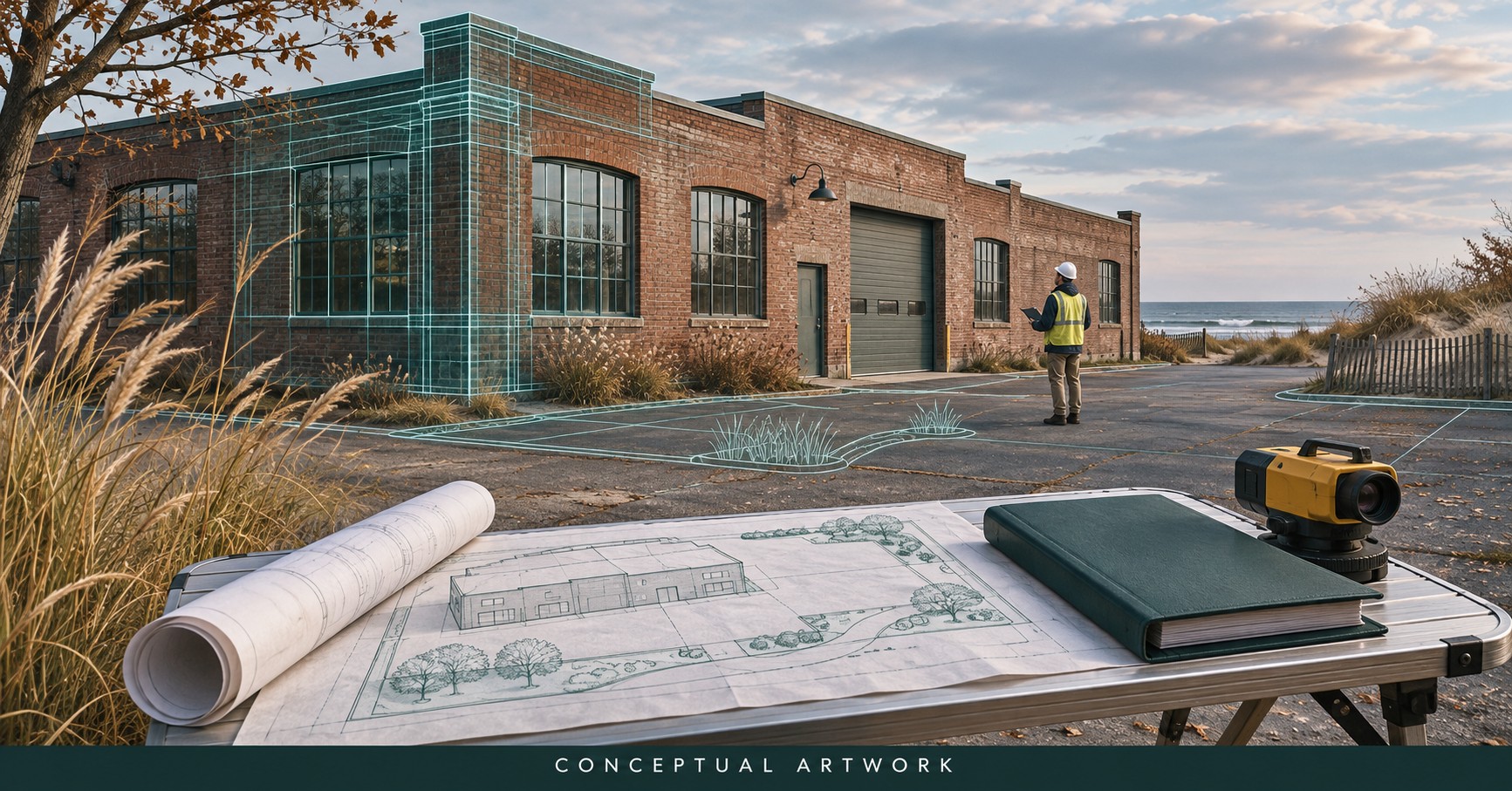
The fresh paint cannot tell you the whole story.
A tidy yard and an attractive building can make a property easy to imagine in its next chapter. They cannot answer every question about its past. For developers and property owners considering Atlantic City, environmental due diligence belongs in the acquisition plan alongside the layout, market and approval questions. The useful starting point is a clear assignment: what does the team need to understand about this property before the owner commits?
1. Give the review a real property and a real deadline.
Prepare a short brief with the address, block and lot, parcel boundaries, proposed use and anticipated purchase timetable. Identify who can arrange access and who holds the available records. Ask the seller for prior environmental reports and related correspondence, then let your advisers assess their relevance. Record what you have requested and what has arrived. A folder labeled “environmental” is more useful when someone can explain its contents and identify what is still missing.
2. Treat a database search as an input.
The NJDEP guidance for its Known Contaminated Sites data explicitly cautions against using the list or map as the sole source for due diligence. A property’s absence from those resources does not constitute a due diligence search. The guidance also describes limitations in mapped locations and points readers toward additional records. Ask your environmental adviser to explain which sources were reviewed, how the property was matched and what further information is needed. Keep the search date with the results.
3. Define the professional assessment before ordering it.
EPA describes All Appropriate Inquiries, or AAI, as a process for evaluating environmental conditions and potential contamination liability. Its guidance covers historical and government records, interviews, inspection, significant information gaps and a written report, with specified work performed by or under an environmental professional. Ask your adviser what assessment fits the transaction, which activities it includes and what falls outside its scope. Agree on the access arrangements and information the purchaser must supply. This gives the team a shared understanding of what the commissioned work can answer.
4. Make timing and responsibility explicit.
EPA also explains that AAI must precede acquisition for certain federal liability protections and that continuing obligations apply afterward. A report alone should not be treated as automatic protection. Have environmental counsel and the environmental professional confirm applicable requirements, timing and responsibilities for this transaction. On the project schedule, show the review, any recommended follow-up and the owner’s decision as separate steps. Ask counsel how the agreement should address access, information and unresolved conditions. Avoid assuming that a seller’s timetable leaves enough room for every investigation.
5. Convert findings into decisions the owner can make.
Request a plain-language meeting after the assessment. What is supported by evidence? What remains uncertain? What additional work does the professional recommend, and what decision would it inform? Ask the appropriate advisers to explain possible implications for the proposed use, scope, budget and sequence. Keep estimated costs distinct from firm proposals. Where an answer is not yet available, record an investigation allowance or an unresolved item with its basis, rather than treating an unknown as zero.
Try the process on a hypothetical acquisition.
Imagine an owner considering a former commercial building for a new use. The seller provides an older report, but the team has not established whether it addresses the current parcel and transaction. The next useful action is to have the professional review its scope, age and remaining questions. It is too early to assume either that the property is suitable or that it should be rejected. This example describes no actual Atlantic City property. It illustrates how a specific unanswered question can become an assignment with an owner and a deadline.
Close the information gap before closing the loop.
Bring the results back to the acquisition brief. Decide whether to proceed, seek more information, revise the concept or pause, with advice from the appropriate professionals. Property owners preparing to sell or reposition a site can use the same process to organize their records before discussions begin. Iron Tide’s coordination role is to help keep those questions and handoffs visible. A useful development conversation ends with everyone understanding the evidence, the remaining work and the next decision.
Practical takeaways
- Give advisers a precise property description, proposed use and acquisition timetable.
- Use public environmental records as research inputs, with their limits documented.
- Agree on the assessment scope, access needs and responsibility for missing information.
- Translate unresolved findings into specific follow-up work before fixing the purchase decision.
- Keep a written record of what is supported, what remains unknown and who will resolve it.
Considering an Atlantic City property acquisition or reuse?
Iron Tide helps organize early development questions and coordinate the people and information needed for the next decision. Tell us about the property and your proposed use so we can discuss the appropriate next conversations with your professional team.
Start a conversation ↗